Airport runways and asphalt pavement projects require large quantities of high-quality construction materials delivered on tight schedules. While asphalt is commonly used for road surfaces and certain runway layers, concrete remains essential for foundations, taxiways, drainage systems, barriers, aprons, and supporting infrastructure. Selecting the appropriate types of concrete batching plant helps ensure reliable material supply, consistent concrete quality, and efficient project execution. Depending on the scale and location of the project, contractors may choose a stationary concrete batching plant, a mobile concrete batching plant, or compact concrete batching plants to meet specific operational needs.
The Importance of Concrete Production in Airport and Pavement Projects
Large transportation projects involve strict engineering standards and demanding construction schedules. Concrete used in airports must provide excellent compressive strength, durability, and long-term performance under heavy aircraft loads and changing weather conditions. Similarly, asphalt pavement projects often require concrete for bridges, culverts, retaining walls, median barriers, and maintenance facilities.
Because of these requirements, batching plants must produce accurate and repeatable concrete mixes. Any inconsistency in material proportioning can affect structural performance and increase maintenance costs in the future. Choosing the right batching plant configuration therefore contributes directly to project quality and operational efficiency.
Stationary Concrete Batching Plant for Major Infrastructure Projects
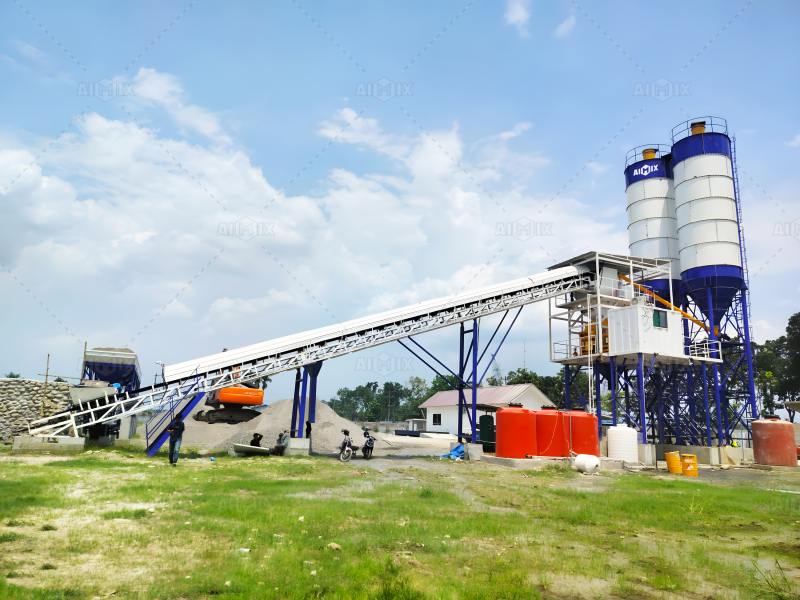
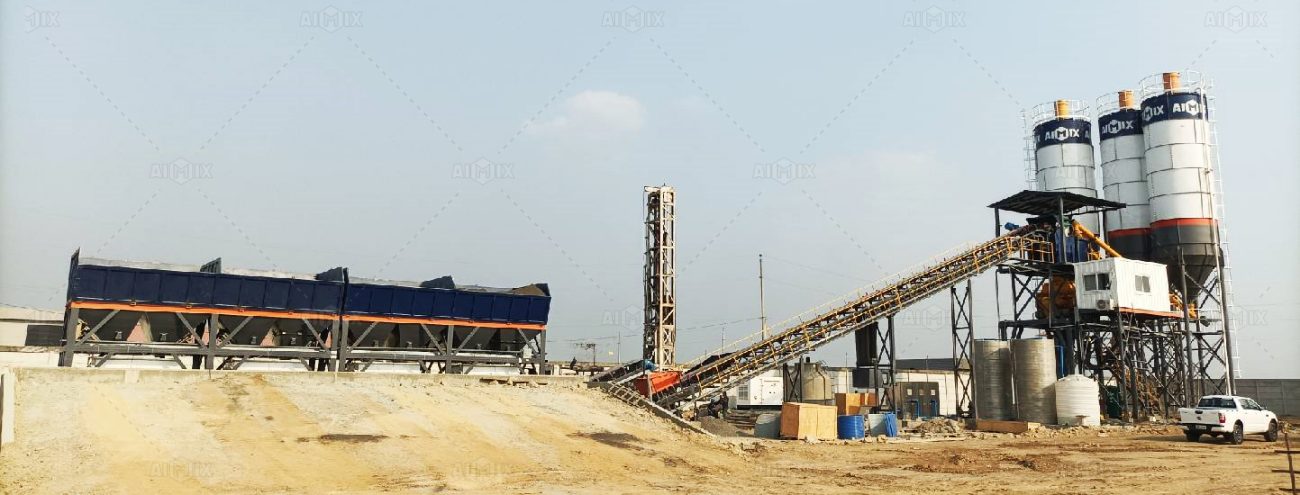
A stationary concrete batching plant is commonly selected for large airport developments and long-term highway construction programs. Installed at a fixed location, this type of plant offers high production capacity and is capable of supplying continuous concrete for months or even years.
Stationary systems usually include multiple aggregate storage bins, large cement silos, twin-shaft mixers, and sophisticated control systems. Their design supports uninterrupted production, making them ideal for projects that require thousands of cubic meters of concrete every week.
Another advantage is the ability to integrate automated quality control and inventory management systems. Operators can monitor raw material consumption, batching accuracy, and production rates in real time, ensuring consistent concrete quality throughout the construction process.
Mobile Concrete Batching Plant for Flexible Construction Sites
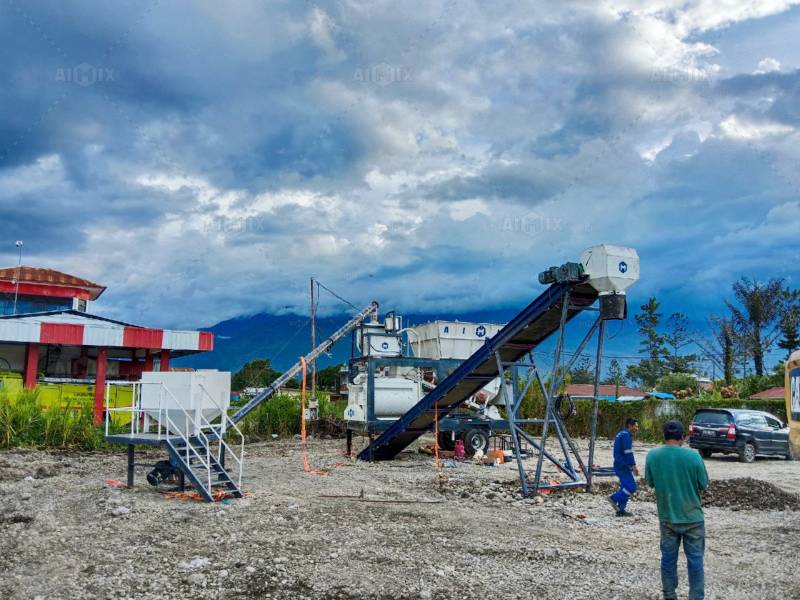
A mobile concrete batching plant provides an excellent solution when construction sites change frequently or when project duration does not justify permanent installation. Mounted on trailers or modular frames, these plants can be transported quickly between locations and commissioned with minimal preparation.
For airport runway rehabilitation, temporary military airfields, and remote road construction projects, mobility offers substantial advantages. Concrete can be produced close to the work zone, reducing transportation distances and minimizing the risk of delays caused by traffic or long delivery routes.
Modern mobile plants feature automated weighing systems, computerized controls, and efficient mixing technologies that allow them to achieve production quality comparable to larger stationary facilities while maintaining outstanding flexibility.
Compact Concrete Batching Plants for Limited Space
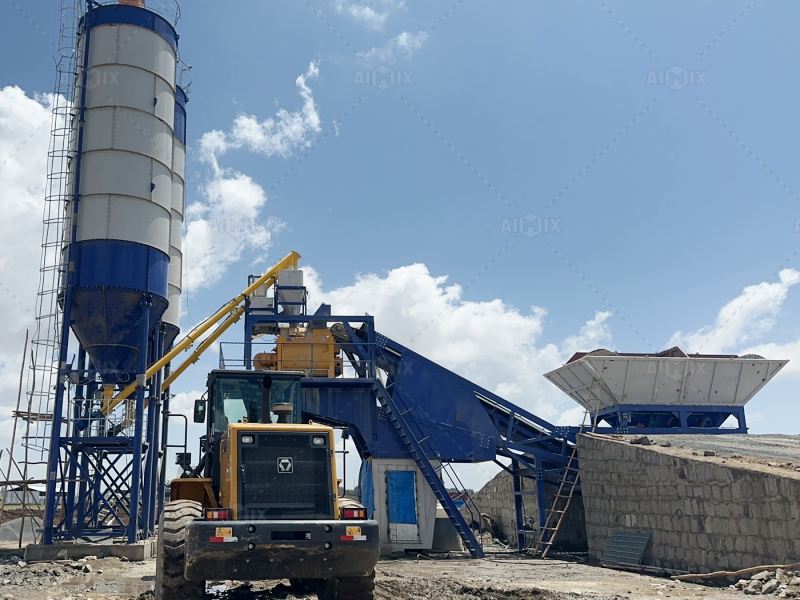
Urban airports and municipal infrastructure projects often face severe space constraints. In these situations, compact concrete batching plants provide a practical alternative by combining essential production components into a highly efficient layout with a smaller footprint.
Compact systems require less land, simpler foundations, and shorter installation periods than conventional large-scale facilities. This allows contractors to begin production quickly while minimizing disruption to surrounding operations.
Despite their reduced size, many compact plants incorporate advanced automation, accurate weighing systems, and high-performance mixers capable of producing concrete that meets demanding engineering specifications. Their modular design also simplifies relocation or future expansion if project requirements change.
Supporting Asphalt Pavement Applications
Although asphalt plants manufacture bituminous mixtures for paving, concrete batching plants remain an important part of many pavement projects. Concrete is extensively used in bridge decks, drainage channels, retaining structures, foundations for lighting systems, equipment bases, safety barriers, and maintenance facilities associated with asphalt highways and airport infrastructure.
Coordinating concrete production with asphalt paving activities helps contractors maintain efficient project schedules. Reliable batching capacity ensures supporting structures are completed on time so that subsequent paving operations can proceed without unnecessary interruptions.
In some airport designs, rigid concrete pavements and flexible asphalt pavements are combined within the same facility, making integrated material management even more important.
Comparing Different Types of Concrete Batching Plant
Selecting among the different types of concrete batching plant depends on production volume, site conditions, mobility requirements, and long-term investment strategy. A stationary plant offers maximum output and stability for permanent projects, while a mobile concrete batching plant emphasizes flexibility and rapid deployment.
Compact concrete batching plants occupy a middle position by combining efficient production with reduced space requirements. They are particularly attractive for contractors working in densely populated areas or on projects where available land is limited.
Each configuration can produce high-quality concrete when properly designed and operated. The best choice depends on balancing capacity, logistics, cost, and project duration.
Technology and Sustainability Benefits
Modern batching plants increasingly incorporate digital technologies that improve operational efficiency and environmental performance. Automated control systems regulate batching accuracy, reduce material waste, and optimize water consumption during mixing.
Dust collection equipment, enclosed conveyors, and low-energy motors help minimize emissions and improve working conditions. Intelligent monitoring systems also support predictive maintenance, reducing unexpected downtime and extending equipment life.
These sustainability improvements are especially valuable in airport projects, where environmental regulations are often strict and construction activities must minimize their impact on nearby communities.
Factors to Consider Before Selecting a Plant
Before investing in a batching plant, contractors should evaluate several practical considerations. Expected production volume is one of the most important factors, as undersized equipment may create bottlenecks while oversized facilities increase unnecessary capital costs.
Transportation logistics should also be assessed. Projects located far from urban centers may benefit from mobile production that reduces dependence on ready-mix deliveries. Site availability, local regulations, environmental requirements, and future expansion plans should likewise be incorporated into the decision-making process.
Maintenance support and spare parts availability are equally important. Choosing equipment from experienced manufacturers with reliable technical service can reduce downtime and improve long-term productivity throughout the project lifecycle.
Conclusion
Airport runway construction and asphalt pavement applications require dependable concrete production systems capable of delivering consistent quality under demanding conditions. Understanding the various types of concrete batching plant enables contractors to select equipment that matches project objectives and operational constraints.
A stationary concrete batching plant provides exceptional capacity for major long-term developments, while a mobile concrete batching plant offers flexibility for changing job sites and remote locations. Meanwhile, compact concrete batching plants maximize efficiency where space is limited and rapid installation is essential. By selecting the appropriate solution, construction teams can improve productivity, control costs, maintain concrete quality, and successfully support airport infrastructure and asphalt pavement projects for years to come.