For road contractors and asphalt producers, the important question is not simply how much fuel an asphalt plant consumes. The better question is which plant features help control fuel use when aggregate moisture changes. A well-matched dryer, burner, airflow system, and automatic control system can make a practical difference to daily operating costs.
This is especially important for contractors who plan to run an asphalt plant for many hours each day. Even a small increase in fuel consumption per tonne can become a significant operating cost over a long highway, airport, bridge, or municipal road project. Therefore, fuel efficiency should be considered during equipment selection rather than after the plant arrives at the jobsite.
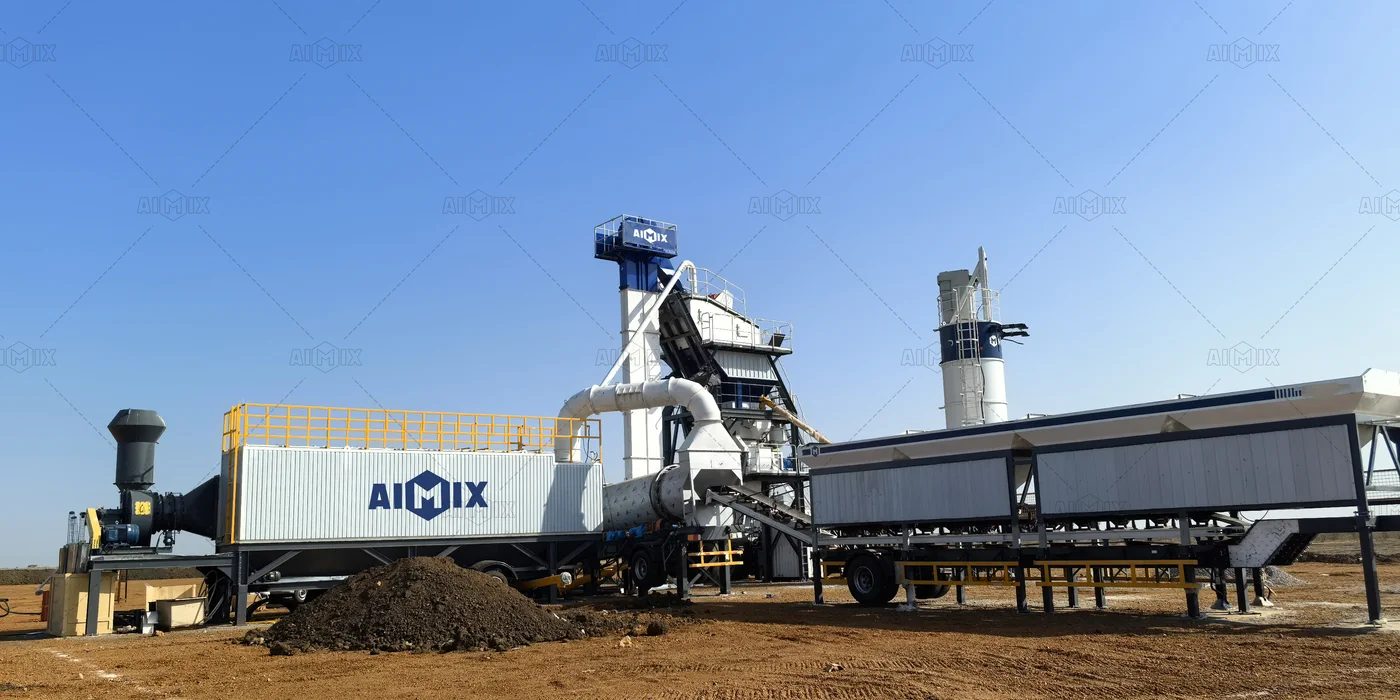
Why Wet Aggregates Increase Asphalt Plant Fuel Consumption
Before comparing different plant features, it helps to understand what happens inside the dryer. Cold aggregate enters the plant with a certain amount of natural moisture. The burner then supplies heat to dry and heat that material before it moves to the mixing process.
However, the burner does not only heat the aggregate. Part of the available thermal energy must evaporate the water. As aggregate moisture rises, the plant therefore needs more heat to maintain the same production rate and discharge temperature.
This relationship becomes particularly important when a contractor wants stable production during wet weather. If the plant cannot remove moisture efficiently, the operator may need to reduce the feed rate. Otherwise, the aggregate may not reach the required temperature before leaving the drying system.
Moisture Can Change During The Same Project
Aggregate moisture is rarely constant. A stockpile can be relatively dry in the morning and much wetter after heavy rain. Fine aggregate may also retain more moisture than coarse aggregate.
For that reason, a plant designed around one fixed moisture assumption may not perform the same way throughout the year. Buyers should instead consider the typical moisture range and the highest realistic moisture condition at the project site.
The practical goal is simple: remove moisture efficiently while maintaining the required aggregate temperature and production rate without supplying unnecessary heat.
1. Efficient Dryer Drum Design
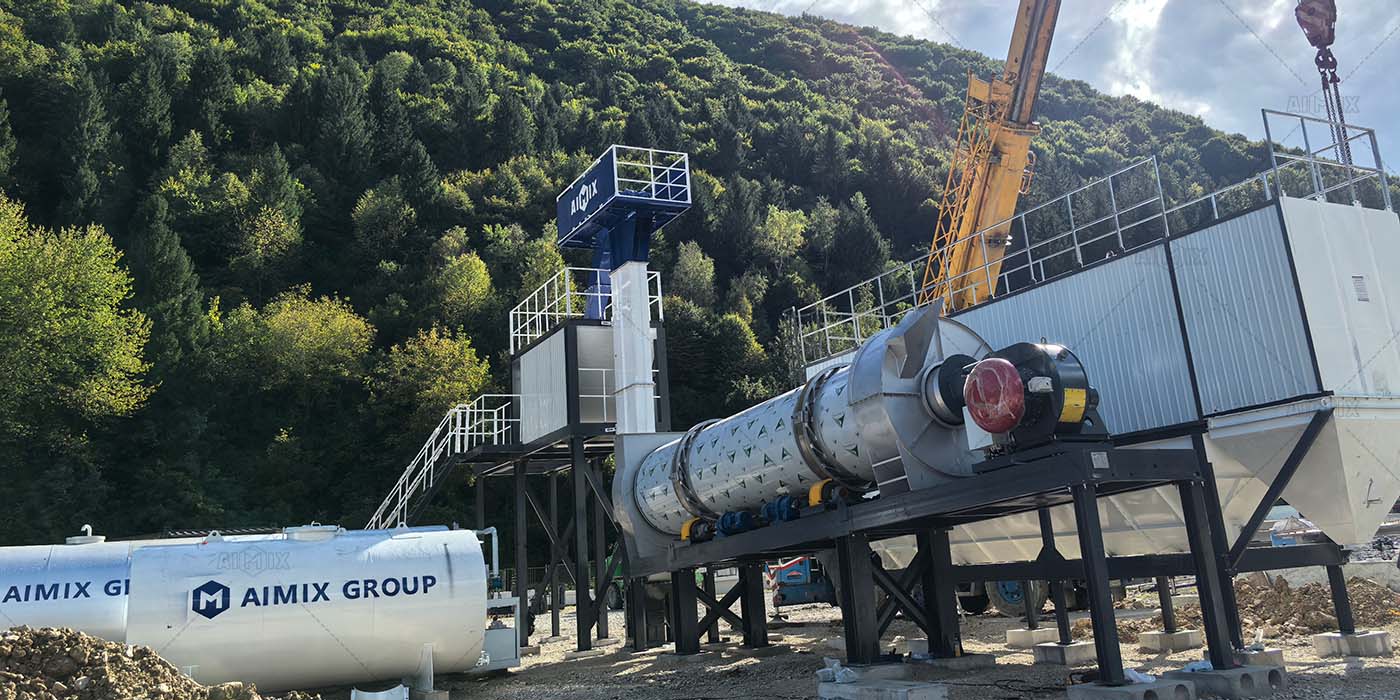
The dryer is one of the first components to examine when comparing asphalt plants for wet aggregates. Its job is to transfer heat from the combustion gases to the aggregate while allowing moisture to leave the system.
A properly designed dryer provides good contact between the hot gas stream and the aggregate. This improves heat transfer and helps the available thermal energy do useful work.
In contrast, poor material distribution can reduce drying efficiency. The burner may then need to provide additional heat simply to compensate for weak heat transfer.
Aggregate Veiling Affects Heat Transfer
Inside a rotary dryer, flights lift the aggregate and allow it to fall through the hot gas stream. This creates a curtain or veil of material.
Good aggregate veiling exposes more material to the hot gases. As a result, heat can transfer more effectively from the combustion gases to the aggregate surface.
Therefore, buyers should ask suppliers about the dryer flight design, material flow, drum dimensions, and expected performance at the target production rate. These details are more meaningful than looking at burner size alone.
Dryer Capacity Should Match Real Production
A larger dryer does not automatically mean lower fuel consumption. The dryer, burner, exhaust fan, and aggregate feed system need to work as a matched system.
For example, a contractor targeting 100 TPH should evaluate the plant around its expected operating range. A plant that operates inefficiently when production fluctuates may consume more fuel than expected, even if its maximum rated capacity looks impressive.
Consequently, ask for fuel consumption information based on your actual production rate and aggregate moisture conditions.
2. Properly Sized And Modulating Burner
The burner provides the thermal energy needed to dry and heat the aggregate. However, choosing a burner simply because it has a high maximum output can lead to the wrong purchasing decision.
What matters is whether the burner can supply the right amount of heat for changing production and moisture conditions.
Why Burner Modulation Matters
Aggregate moisture can change throughout the production day. When the material becomes wetter, the dryer needs additional heat. When the material becomes drier, the required heat input can decrease.
A properly controlled burner can adjust its output according to the thermal demand. Therefore, the plant does not need to operate continuously at maximum burner capacity.
This becomes particularly useful for contractors who work with several aggregate sources. Different suppliers, stockpiles, or material fractions may have different moisture levels.
Do Not Judge A Burner By Power Alone
A powerful burner can provide enough heat, but that does not automatically make the system efficient. Combustion quality, fuel-air ratio, control accuracy, dryer design, and exhaust conditions all affect the actual result.
Therefore, when comparing an asphalt plant, ask the supplier how the burner output changes during normal operation. Also ask what conditions were used to calculate the quoted fuel consumption.
3. Automatic Temperature Control
Wet aggregate creates changing thermal conditions. Therefore, automatic temperature control becomes increasingly useful when the plant needs stable production under changing weather and material conditions.
A modern asphalt plant can monitor key operating parameters such as aggregate temperature, exhaust temperature, burner operation, and production rate. The control system can then help the operator maintain a more stable process.
This matters because the operator should not need to guess how much heat the dryer requires. Instead, the control system should provide useful process information and allow adjustments based on actual conditions.
Stable Aggregate Temperature Matters
The objective is not simply to make the aggregate as hot as possible. Excessive heating can waste fuel, while insufficient heating can affect asphalt production and mix quality.
Therefore, stable temperature control is more useful than simply increasing burner power. The plant should supply enough heat to achieve the required process temperature without unnecessary thermal input.
4. Online Aggregate Moisture Measurement
For plants operating in wet climates, moisture measurement can provide another useful layer of process control.
Imagine that the aggregate entering the cold feed system becomes wetter after rainfall. If the plant continues using the same burner setting, the thermal demand may no longer match the actual material condition.
Conversely, if the aggregate becomes drier but the plant continues supplying the same high heat input, some energy may be wasted.
Online moisture measurement can provide operators with more immediate information about material conditions. When integrated with the plant control strategy, this information can support faster adjustments.
Questions To Ask About Moisture Measurement
- Can the plant measure aggregate moisture during production?
- Where is the moisture sensor installed?
- Can the moisture data be displayed in the control system?
- Can moisture changes influence burner operation?
- How quickly can the system respond to changing aggregate conditions?
These questions help buyers understand the actual value of an automation package instead of relying on general claims about intelligent control.
5. Efficient Airflow And Exhaust Control
Fuel efficiency also depends on how combustion gases move through the dryer. The burner needs appropriate combustion air, while the exhaust system needs to remove moisture and gases from the drying process.
The exhaust fan creates the airflow that moves hot gases through the dryer and toward the dust collection system. Therefore, fan performance and draft control influence the overall thermal balance.
If airflow is poorly matched to the burner and dryer, the plant may not use available heat effectively. In that situation, additional fuel may be required to reach the desired aggregate temperature.
More Air Does Not Always Mean Better Drying
It is easy to assume that increasing airflow will always improve drying. In reality, the system needs balanced airflow.
Too little airflow can interfere with combustion and moisture removal. Too much airflow can increase heat carried away through the exhaust system.
Therefore, the burner, dryer, exhaust fan, and dust collector should be designed as one system. This approach is especially important when the plant regularly handles wet aggregates.
6. Good Dryer And Duct Insulation
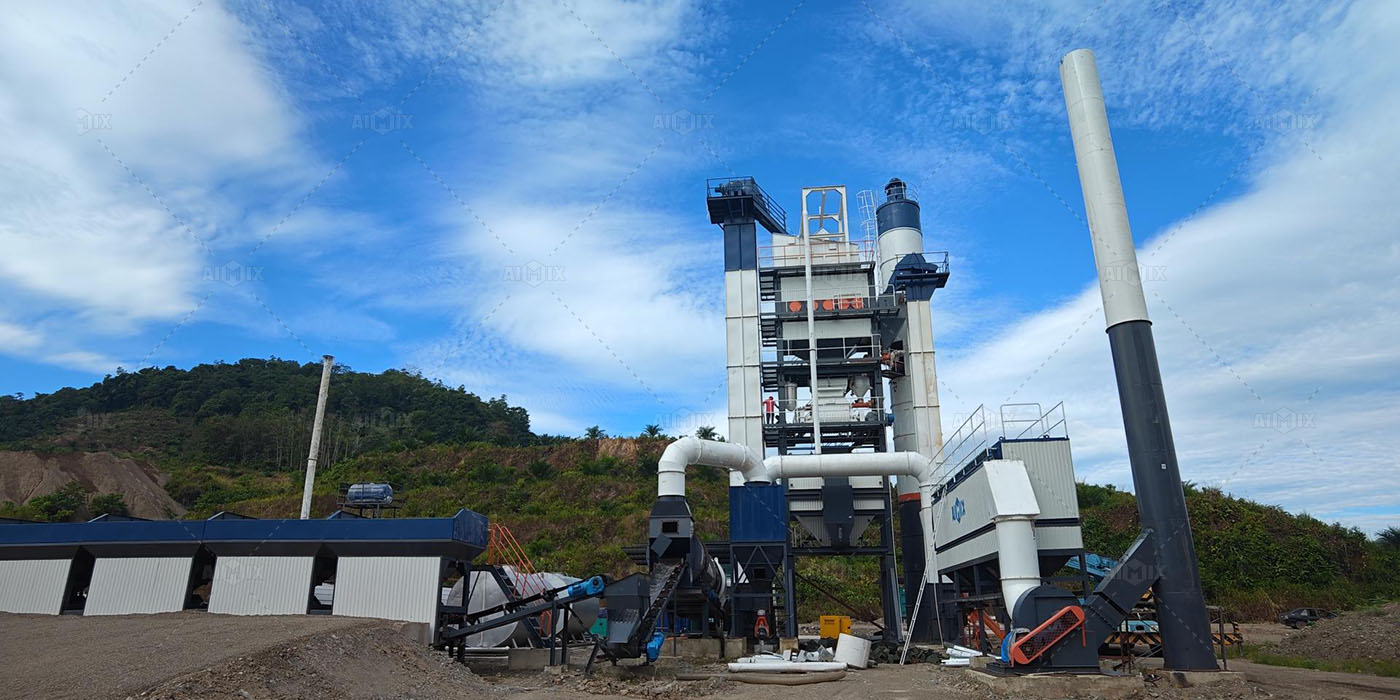
Even an efficient burner can waste energy if excessive heat escapes from the dryer or hot gas ducts.
Proper insulation reduces unnecessary heat loss from hot surfaces. This can become more valuable when the asphalt plant operates for long shifts and high annual production volumes.
For example, a small continuous heat loss may seem insignificant during a short test run. However, the same loss can become a meaningful operating cost after thousands of production hours.
Therefore, buyers should inspect the insulation design around the dryer, hot ducts, and other high-temperature areas. The objective is to keep useful thermal energy inside the process for as long as possible.
7. Stable Cold Aggregate Feeding
Fuel efficiency begins before aggregate enters the dryer. The cold aggregate feeding system affects how consistently material reaches the drying drum.
If the feed rate changes sharply, the thermal load can also change. The burner and dryer may then require more frequent adjustments.
A stable feeder helps create a more predictable production process. It also allows the control system to respond to changing conditions more effectively.
For this reason, buyers should evaluate cold feed bins, feeder accuracy, conveyor design, and aggregate separation when comparing plants for wet aggregate applications.
Stockpile Management Also Matters
Plant technology cannot completely eliminate the effect of poor aggregate storage. If rain enters the stockpile, the dryer must eventually remove that additional water.
Therefore, practical site management should work together with plant technology. Good drainage, appropriate stockpile layout, and rain protection can reduce unnecessary moisture before the material reaches the dryer.
This is particularly relevant for contractors operating in tropical, monsoon, coastal, or high-rainfall regions.
Which Asphalt Plant Features Should Buyers Prioritize?
Not every project needs every possible automation option. The right configuration depends on production capacity, aggregate moisture, climate, fuel availability, project duration, and required asphalt mix types.
However, buyers working with wet aggregates should compare several features together rather than selecting one component in isolation.
| Plant Feature | Benefit For Wet Aggregates | What Buyers Should Check |
|---|---|---|
| Efficient Dryer Drum | Improves heat transfer and moisture removal | Drum size, flight design, material flow, drying capacity |
| Modulating Burner | Adjusts heat input according to thermal demand | Burner control range and fuel options |
| Automatic Temperature Control | Helps maintain stable aggregate temperature | Sensors, control logic, and operator interface |
| Moisture Measurement | Shows changing aggregate moisture conditions | Sensor location and system integration |
| Airflow Control | Supports efficient combustion and drying | Fan capacity, draft control, and system matching |
| Insulation | Reduces unnecessary heat loss | Dryer and hot duct insulation |
| Stable Cold Feeding | Maintains a more consistent thermal load | Feeder accuracy and bin configuration |
How Much Fuel Can These Features Save?
There is no single fuel-saving percentage that applies to every asphalt plant. Actual fuel consumption depends on aggregate moisture, aggregate type, ambient temperature, production rate, fuel type, burner performance, dryer design, and operating practices.
Therefore, buyers should be careful with general claims such as “20% lower fuel consumption” unless the supplier provides the conditions behind the calculation.
A more useful approach is to compare fuel consumption under the same production rate and similar aggregate moisture conditions. For example, if two plants are both being considered for 100 TPH production, ask both suppliers to provide expected fuel consumption at the same moisture level.
This creates a more meaningful comparison.
Calculate Fuel Cost Per Tonne
Fuel cost per tonne is often more useful than total hourly fuel consumption when evaluating long-term operating costs.
For example, a plant producing 100 tonnes per hour may run for eight hours per day. That means the plant can produce around 800 tonnes in one operating day at full utilization. A small difference in fuel consumption per tonne can therefore accumulate quickly over a long project.
However, the calculation should use realistic production conditions. If wet aggregate reduces actual output, the fuel cost per tonne can increase even if the burner itself appears efficient.

Batch Plant Or Drum Plant For Wet Aggregates?
The choice between batch and drum production also deserves attention. Both systems need to dry and heat aggregate, but their material flow and mixing processes differ.
A batch plant dries and heats aggregate before screening, weighing, and mixing it with mineral filler and asphalt binder. This process allows the plant to control individual aggregate fractions and produce different mix designs.
For projects requiring multiple asphalt recipes, a tarmac asphalt plants solution based on a suitable batch configuration can provide useful production flexibility.
By contrast, a drum plant uses a continuous process. Aggregate drying, heating, and mixing occur through continuous material flow. This arrangement can work well when production follows a relatively consistent mix requirement.
Consequently, the best choice depends on the project rather than simply on fuel consumption claims.
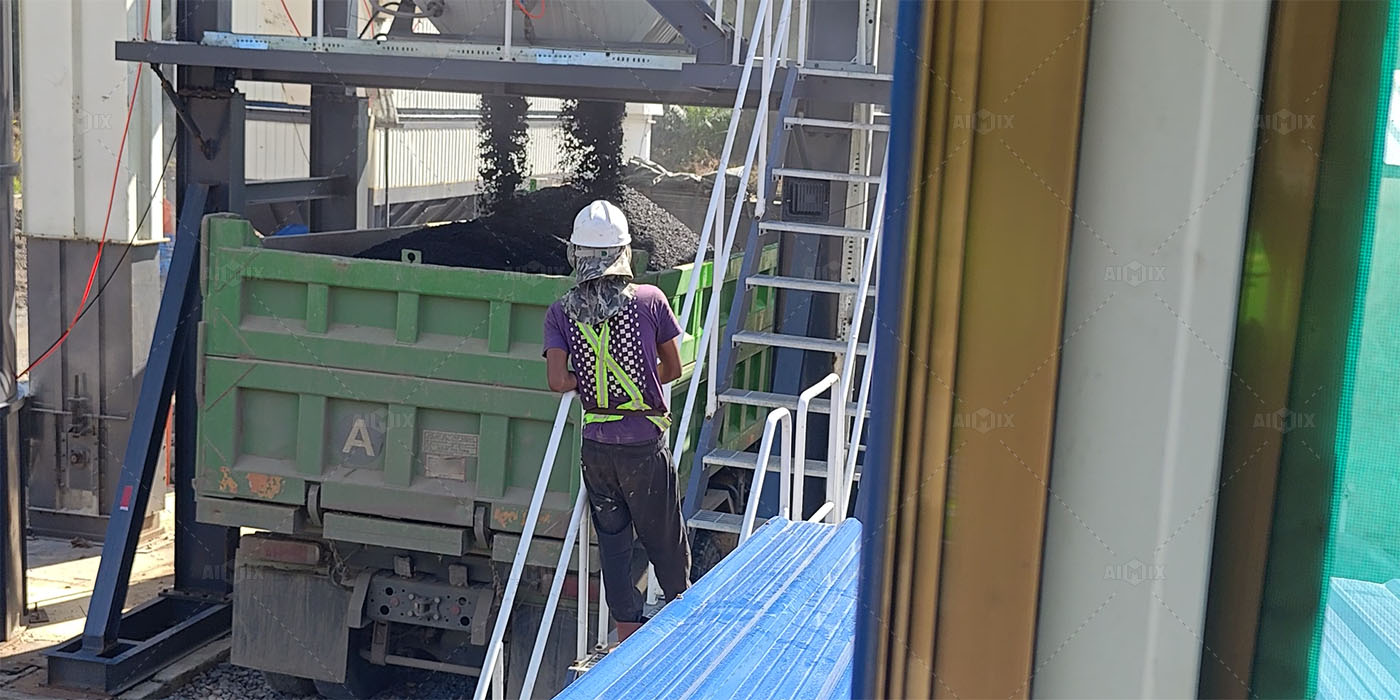
Why Hot Mix Production Requires Good Moisture Control
Hot mix asphalt production requires the aggregate to reach an appropriate temperature before mixing. If excess moisture remains, it can interfere with the thermal balance of the process.
For this reason, a hot mix asphalt plant should be evaluated according to its complete heating and drying system rather than only its mixing capacity.
For contractors working in wet regions, this point is especially important. A plant that performs well during dry weather may experience different fuel demand during the rainy season.
Therefore, seasonal operating conditions should be included in the equipment specification from the beginning.
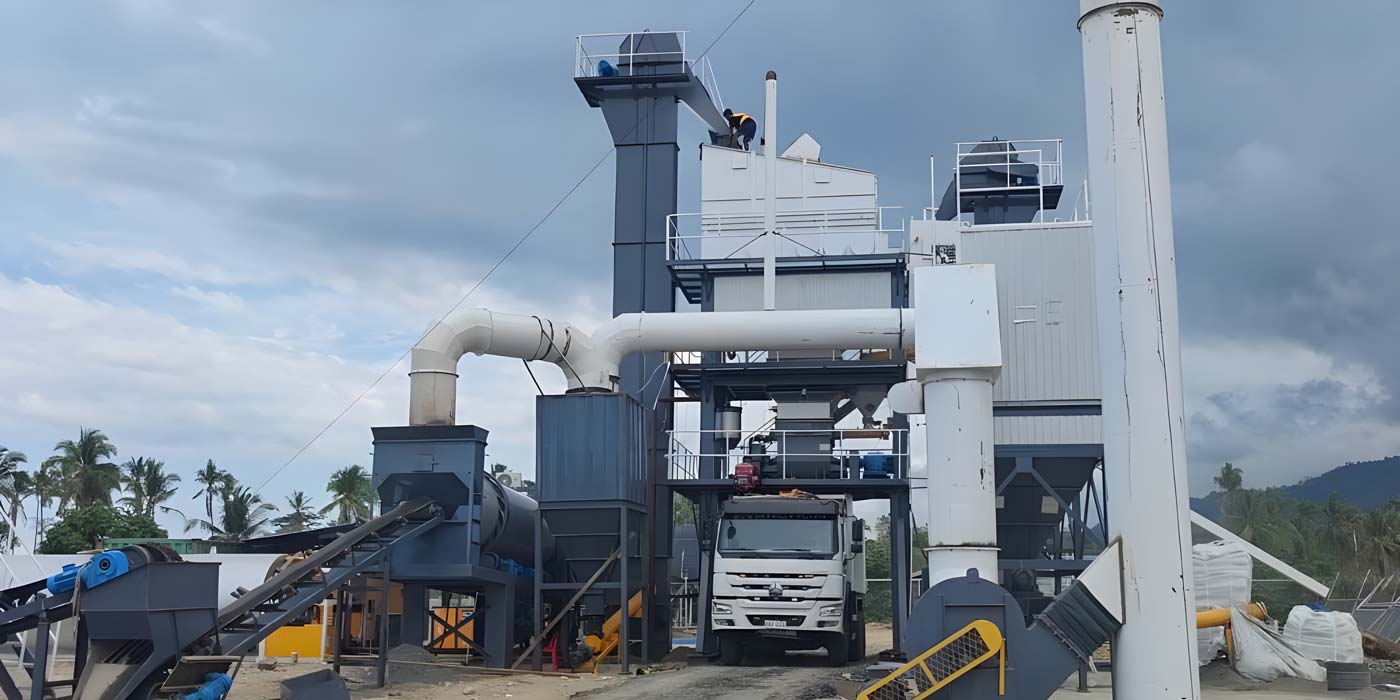
When A Drum Plant May Be A Practical Option
Continuous production can be attractive for projects with stable asphalt demand. Contractors may prefer a simpler material flow when the project requires large quantities of a relatively consistent asphalt mixture.
In such cases, a drum plant can be considered as one of the available configurations.
However, buyers should still compare dryer performance, burner control, fuel consumption, production capacity, aggregate moisture, and required mix flexibility. A drum configuration should not be selected simply because it has fewer process stages.
What To Ask An Asphalt Plant Supplier Before Buying
The quotation stage is the right time to discuss wet aggregate conditions. Do not wait until installation to explain that your aggregate can become very wet during the rainy season.
Provide the supplier with practical project information, including:
- Required production capacity in TPH.
- Normal aggregate moisture content.
- Maximum expected moisture during rainy periods.
- Aggregate type and particle size.
- Required asphalt mixture temperature.
- Daily production hours.
- Expected annual production.
- Available fuel at the project location.
- Required asphalt mix types.
- Stockpile and aggregate storage conditions.
- Local environmental and dust-control requirements.
With this information, an experienced asphalt mixing plant supplier can evaluate the dryer, burner, feeding system, exhaust system, and automation package according to actual operating conditions.
How To Compare Two Asphalt Plants More Accurately
When two plants appear similar on paper, compare their operating assumptions rather than only their listed specifications.
First, compare the rated capacity. Next, compare the expected production rate under your actual aggregate moisture. Then examine the burner system, dryer design, automation, airflow control, and fuel consumption.
After that, consider maintenance access and spare parts. A small reduction in fuel consumption may not provide the expected financial benefit if the plant experiences frequent downtime or requires difficult maintenance.
Finally, consider the project duration. A contractor running an asphalt plant for several months may have different priorities from an asphalt producer planning to operate the same plant for ten years.
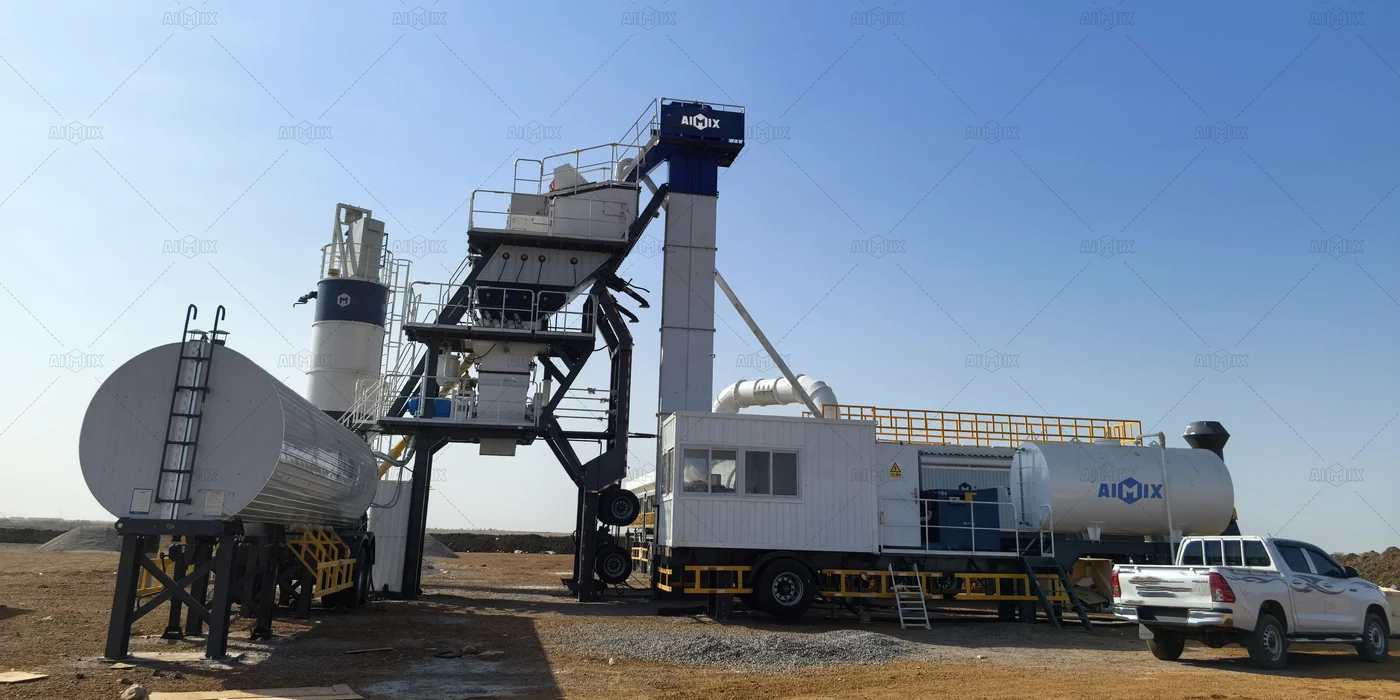
Practical Checklist For Wet Aggregate Conditions
Before placing an order, use the following checklist to confirm that the plant matches your project conditions:
- Confirm the required TPH capacity.
- Provide normal and maximum aggregate moisture levels.
- Check the dryer size and drying arrangement.
- Confirm the burner fuel type and control method.
- Ask how burner output changes with thermal demand.
- Check aggregate temperature monitoring.
- Ask whether online moisture measurement is available.
- Review exhaust fan and airflow control.
- Check dryer and hot duct insulation.
- Evaluate cold aggregate feeder stability.
- Compare fuel consumption using the same operating conditions.
- Consider stockpile drainage and rain protection.
- Check maintenance and spare parts support.
Final Takeaway
The asphalt plant features that can help reduce fuel consumption with wet aggregates are not limited to one machine component. Efficient dryer design, good aggregate veiling, a properly sized modulating burner, automatic temperature control, moisture measurement, balanced airflow, effective insulation, and stable aggregate feeding all contribute to better thermal performance.
At the same time, equipment cannot completely compensate for poor aggregate management. Rain protection, drainage, stockpile organization, and consistent material feeding also influence the amount of water that the dryer must remove.
Therefore, contractors should evaluate fuel efficiency as a complete production system. Instead of asking only “How much fuel does this asphalt plant use?”, ask “How does this plant perform when my aggregate becomes wet?” That question provides a much more realistic basis for equipment selection.
If you are planning a new asphalt plant or replacing an existing system, provide your target TPH, aggregate moisture range, fuel type, project location, daily operating hours, and expected asphalt mix requirements. With these details, the dryer, burner, feeding system, and control configuration can be evaluated around your actual production conditions.
Want to reduce unnecessary fuel consumption during wet aggregate production? Start by comparing the complete drying and heating system rather than looking at burner size alone. A project-specific asphalt plant configuration can help you balance production capacity, fuel use, mix quality, and long-term operating requirements.