The global asphalt market is crowded with options. Any search for an “asphalt plant” yields dozens of manufacturers touting low costs. But price is a snapshot; suitability is a movie. Construction suitability includes site topography, access roads, batch size requirements, mobility needs, environmental regulations, and even the skill level of local operators. A cheap stationary drum may require dozens of dump trucks hauling mix over bad roads, while a slightly more expensive portable asphalt plant can move with the paving crew, eliminating haul costs. The initial price difference often disappears within weeks of operation. This article will break down why suitability—especially portability and scale—should guide your purchase, not the lowest tag.
The hidden costs of prioritizing price over suitability
Every asphalt plant purchase has two ledgers: the acquisition cost and the operational cost. When buyers focus solely on the price of an asphalt plant for sale(planta de asfalto en venta), they ignore factors that rapidly inflate total ownership cost. Consider fuel efficiency: a plant that is poorly matched to the site’s aggregate moisture will burn excess fuel, adding thousands per month. Or consider mobility: a fixed plant on a multi-site highway job forces long hauls, each mile costing $3–$5 per ton. Over a 100,000‑ton project, that’s an extra $300,000–$500,000 in trucking. A portable asphalt plant, even if it costs 20% more upfront, eliminates those hauls. Similarly, a mini asphalt plant for small urban patches or remote rural roads avoids the overhead of running a 400‑tph monster. The lesson: price is temporary, suitability is permanent.
Case example: Remote road repair
A county in Wyoming needed to patch 50 miles of mountain road. They found a cheap stationary asphalt plant for sale at $350,000. But the plant sat 80 miles from the farthest patch. Hauling hot mix over winding roads caused temperature loss, forcing rework. After six weeks, they sold the plant at a loss and bought a portable asphalt plant for $480,000. The portable unit moved every 5–10 miles. Haul distance dropped to under 5 miles. The project finished three months earlier. The total cost? The cheaper plant ended up costing $210,000 more in haulage and rework. Price never told that story.
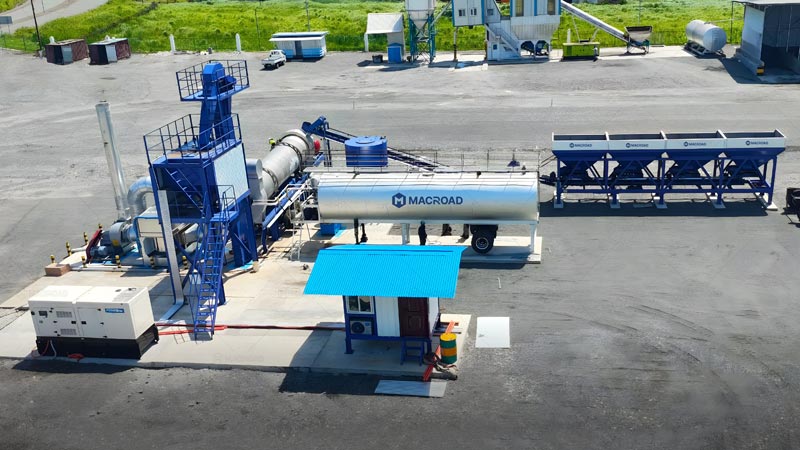
Why a portable asphalt plant dominates job‑site suitability
Mobility is the single biggest driver of construction suitability. A portable asphalt plant(planta de asfalto portátil) is designed to be dismantled, moved, and reassembled in days, not weeks. This fits modern paving contracts where work zones shift continuously—highways, airport runways, large housing developments. The key advantages are:
- Reduced haul distances: Keep the plant within 5–10 miles of the paver.
- Lower emissions per ton: Shorter truck trips mean less diesel burn.
- Flexibility for seasonal work: Move the plant north in summer, south in winter.
- Faster project completion: Less time wasted on empty backhauls.
When you see an “asphalt plant for sale” that is portable, you are buying schedule reliability. Even if the price is 15–25% higher than a stationary equivalent, the return on investment appears in the first major relocation. Contractors who have used both report that portable units pay for their premium within 18 months purely through logistics savings. Suitability wins.
Portability vs. production capacity
A common myth is that portable means small. Modern portable asphalt plants reach 300–400 tph, rivaling stationary drums. The difference is in the frame design: portable plants have axle‑mounted chassis, folding legs, and modular control cabins. They meet highway transport regulations without special permits. So suitability does not require sacrificing scale. The best of both worlds exists.
When a mini asphalt plant is the most suitable choice
Not every project needs a 200‑tph beast. Urban infill, bike paths, golf cart trails, farm driveways, and small municipal patching demand small batch sizes. Here, a mini asphalt plant (typically 20–80 tph) excels. These units are often overlooked because their per‑ton price appears higher than large plants. But suitability rewrites the math. A mini asphalt plant can be towed behind a one‑ton truck, set up in two hours, and run on single‑phase power or a small diesel gen set. Downtime is nearly zero because parts are common and maintenance is simple. For a contractor doing $500,000 in annual small jobs, buying a mini plant for $80,000–$150,000 beats renting mix from a distant commercial plant at $120/ton plus $30/ton delivery. The mini plant produces mix at $65/ton. After 2,000 tons, the plant pays for itself. Price per ton alone would steer you toward a large plant, but suitability screams “mini”.
Real‑world mini plant success: Rural electric cooperative
A Tennessee electric co‑op needed to pave under power lines after substation work. They bought a mini asphalt plant for $95,000. In two years, they produced 8,000 tons, saving $200,000 compared to buying commercial mix. The plant fit in a 40‑foot container when not in use. Price was not the deciding factor—site access and low volume were. Suitability first, price second.
The “asphalt plant for sale” trap: How low prices hide poor suitability
Online marketplaces are flooded with used or off‑brand “asphalt plant for sale” listings. Some are genuine bargains; many are traps. Common red flags include:
- Missing mobility: The plant is stationary but the seller calls it “skid‑mounted” (not the same as road‑portable).
- Non‑standard electricals: 600V or 50Hz systems that require expensive transformers in 480V/60Hz regions.
- Proprietary control systems: Impossible to repair locally.
- Excessive foundation requirements: Needs 6 feet of concrete instead of compacted gravel.
- High minimum production: Cannot run below 80 tph, forcing you to waste mix or shut down early.
Each of these suitability failures creates recurring costs. A buyer who ignores them to save $50,000 upfront often pays $200,000 extra over five years. Always audit suitability before looking at the price tag. Create a checklist: site access width, ground bearing pressure, power availability, operator skill, parts supply, and haul road condition. Then match those to asphalt plant specs(especificaciones de la planta asfáltica), not to the lowest number.
Decision framework: Price vs. suitability for different asphalt plant types
No single rule applies to every buyer. The correct balance depends on your business model. Below is a practical framework:
When price can take priority (low‑sensitivity jobs)
If you own a permanent quarry with stable 10‑year contracts, a stationary asphalt plant at the lowest possible price may be logical. Haul distances are fixed, and you never move. In that case, negotiate hard on price. But even then, suitability factors like burner efficiency and baghouse capacity matter more than the sticker price over a decade.
When suitability must take priority (most contractors)
For any contractor who works on multiple sites per year, a portable asphalt plant is almost always the better financial choice. Similarly, for small‑volume or remote work, a mini asphalt plant beats a larger used plant. In these cases, calculate total cost per ton delivered to the paver, not cost per ton exiting the plant. Include trucking, setup, teardown, idle time, and rework due to temperature loss. Suitability will win by a large margin.
How to evaluate an asphalt plant for suitability before price
Follow these six steps when you see an “asphalt plant for sale”:
- Map your job sites: How many moves per year? Average distance between sites? If >3 moves, choose portable or mini.
- Measure access: Narrow roads? Low bridges? Weight limits? A portable asphalt plant with foldable components fits where a stationary unit never could.
- Calculate daily tonnage needs: Peak paving days vs. average. A mini asphalt plant that runs 12 hours at 60 tph delivers 720 tpd—enough for many small to mid contractors.
- Check power availability: Remote sites often lack three‑phase. A portable asphalt plant with a diesel‑hydraulic option solves this.
- Assess operator skill: Complex computer controls cause downtime. Some portable plants offer manual override.
- Review parts and service: A cheap plant with 6‑week lead time on a burner nozzle is not suitable. Prioritize plants with local dealer networks, even at higher price.
Only after this suitability audit should you compare prices. You will likely find that the most suitable plant is not the cheapest—but it is the most profitable.
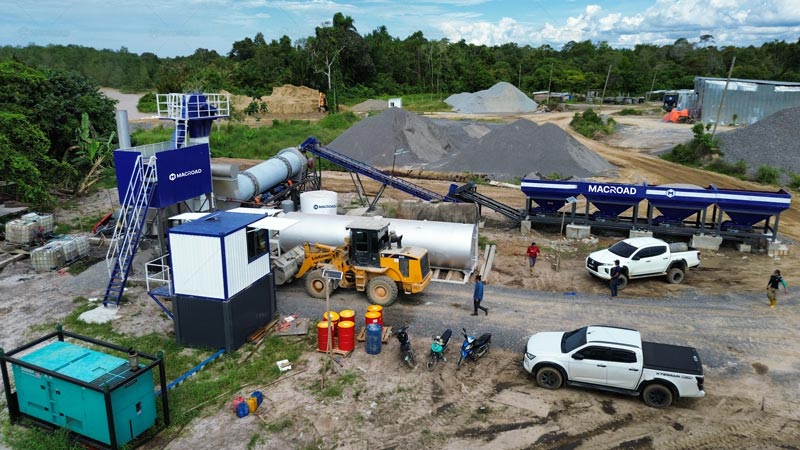
Long‑term cost analysis: Price vs. suitability over 5 years
Let’s model two scenarios for a contractor with $2 million annual asphalt production:
| Factor | Cheap stationary plant ($350k) | Suitable portable plant ($480k) |
|---|---|---|
| Annual tonnage | 40,000 tons | 40,000 tons |
| Avg haul distance | 25 miles | 6 miles (plant moves 4x/year) |
| Truck cost per ton | $8.50 | $2.00 |
| Annual trucking cost | $340,000 | $80,000 |
| Setup/teardown per move | $12,000 (crane + crew) | $4,000 (self‑propelled legs) |
| Annual move cost (4 moves) | $48,000 | $16,000 |
| Fuel efficiency (gal/ton) | 0.85 | 0.75 (better insulation) |
| Annual fuel cost ($3.50/gal) | $119,000 | $105,000 |
| Downtime (days/year) | 12 (parts delays) | 3 (local support) |
| Lost revenue per downtime day | $8,000 | $8,000 |
| Annual downtime cost | $96,000 | $24,000 |
| Total annual operating cost | $603,000 | $225,000 |
| 5‑year operating cost | $3,015,000 | $1,125,000 |
| Plus initial purchase | $3,365,000 | $1,605,000 |
The suitable portable asphalt plant saves $1.76 million over five years, despite a $130k higher purchase price. This is why suitability trumps price. The same logic applies to a mini asphalt plant for small producers(mini planta asfáltica para pequeños productores): lower initial price but even lower operating costs when matched to small jobs.
Conclusion: Build your decision on suitability, not price tags
The asphalt industry is littered with stories of buyers who chased a low‑cost “asphalt plant for sale” only to be trapped by immobility, high haulage, and constant breakdowns. A portable asphalt plant or a mini asphalt plant may cost more upfront, but it aligns with the reality of modern construction: multiple sites, tight schedules, remote locations, and volatile fuel prices. Price is a number on a quote; suitability is the number on your profit sheet. Next time you evaluate an asphalt plant, ask first: “Does it fit my sites, my trucks, my operators, and my schedule?” If the answer is no, walk away regardless of price. The right plant pays for itself. The wrong plant pays your competitors.
Final recommendation: For multi‑site contractors, prioritize a portable asphalt plant. For small urban or rural work, choose a mini asphalt plant. For fixed quarries with stable long‑term contracts, price can become a secondary factor—but never ignore suitability for environmental compliance and future expansion. Build smart, not cheap.